Imagine zipping through congested city streets in a silent, zero-emission car that costs pennies to run and feels surprisingly spacious inside despite its tiny footprint. For millions of Indian families who once dreamed of owning the original Tata Nano, the 2026 version promises to revive that aspiration in the electric age. As Tata Motors continues expanding its EV lineup with models like the Tiago EV, Nexon EV, and Punch EV, rumors and industry speculation point to a potential revival of the Nano nameplate as a compact, budget-friendly electric vehicle tailored for daily urban commutes.
This comprehensive guide dives deep into everything known and reasonably expected about the 2026 Tata Nano EV. Whether you are a first-time buyer seeking an accessible entry into electric mobility, a daily commuter tired of high fuel costs, or simply someone curious about how Tata might bring back its most iconic “people’s car” concept, you will find clear, practical insights here. We will cover design and styling, expected performance and range, features, pricing considerations, comparisons with rivals, ownership realities, and more—so you can make an informed decision when the time comes.
The Legacy of the Tata Nano and Its Electric Revival
The original Tata Nano, launched in 2008, captured the world’s imagination as the cheapest car ever produced, priced at around one lakh rupees. It was designed explicitly to upgrade millions of two-wheeler families to a safe, four-wheeled vehicle. While it faced challenges related to perception, safety perceptions, and market positioning, its compact size, maneuverability, and affordability left a lasting cultural imprint across India.
Fast-forward to 2026, and the automotive landscape has transformed dramatically with the rise of electric vehicles. Tata Motors has emerged as India’s EV leader, having sold hundreds of thousands of units across its portfolio and driven billions of emission-free kilometers. Bringing the Nano back as an EV makes strategic sense in this context. It could target the growing demand for affordable, compact city cars that deliver zero tailpipe emissions, low operating costs, and modern technology without breaking the bank.
Industry observers note that an electric Nano would build on Tata’s proven Ziptron or similar EV architecture, adapted for a smaller platform. Unlike larger SUVs or crossovers in Tata’s current lineup, this model would prioritize urban practicality—easy parking in tight spaces, nimble handling in traffic, and sufficient range for daily city drives of 50-100 km. The revival would not simply copy the past but evolve the Nano into a smarter, greener solution for today’s congested metros and tier-2 cities.
What makes this revival particularly exciting is its potential to democratize EV ownership. Many potential buyers hesitate due to higher upfront costs or range anxiety with current entry-level options. A well-executed Nano EV could address these barriers head-on, offering a familiar, trusted name with contemporary electric advantages.
In the sections ahead, we will explore how the 2026 Tata Nano EV might achieve this balance, drawing from Tata’s established EV expertise and reasonable projections based on industry trends.
Expected Design and Exterior Styling: Compact Yet Modern
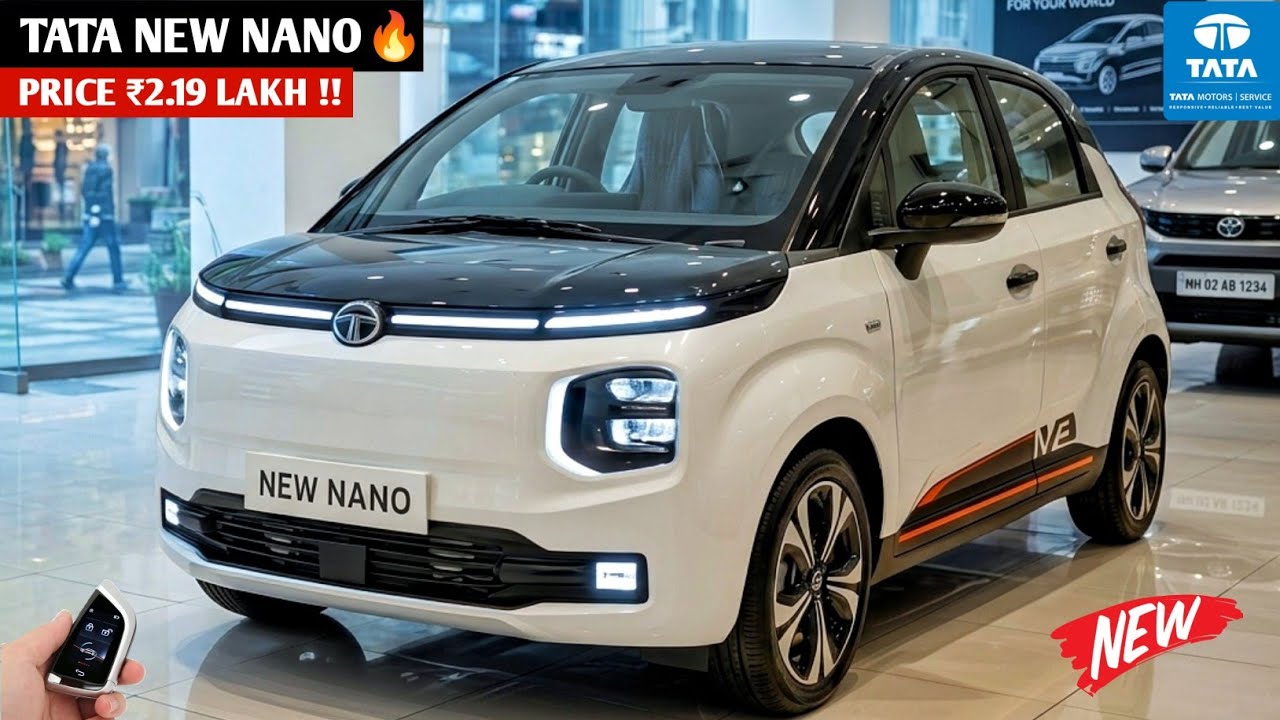
The 2026 Tata Nano EV would likely retain the core philosophy of compactness while adopting Tata’s contemporary “Impact” or evolved design language seen in recent models. Picture a sleek, rounded hatchback silhouette with clean lines, a short bonnet, and a tall cabin that maximizes interior space within a footprint under 3.5 meters. This approach echoes the original Nano’s innovative packaging but updates it with LED headlights, a closed grille (typical for EVs to optimize aerodynamics), and subtle blue accents to signal its electric nature.
Practical advantages become evident in daily use. The compact dimensions would make it effortless to navigate narrow lanes, U-turn in tight spots, and park in crowded residential areas or office complexes where larger vehicles struggle. Expect a lightweight construction that aids efficiency, possibly incorporating high-strength steel and some aluminum elements for better rigidity without adding unnecessary weight.
Color options could include vibrant shades suited to urban buyers—think energetic blues, fresh greens, and classic whites—along with premium finishes on higher variants. Alloy wheels, even in smaller sizes to keep costs down, would add a stylish touch while maintaining ride comfort over potholed roads.
One thoughtful detail many appreciate in modern city cars is good ground clearance. The Nano EV would need to handle India’s varied road conditions, so an expected 160-180 mm clearance (similar to other small Tata models) would help avoid scraping on speed breakers or flooded streets during monsoons. Aerodynamic tweaks, such as underbody panels and optimized mirrors, would further improve efficiency and range.
Overall, the exterior would strike a balance: familiar enough to evoke nostalgia for original Nano owners, yet fresh and contemporary to attract younger buyers entering the EV space. This design evolution positions the car not as a budget compromise but as a smart, purposeful urban tool.
Interior Space, Comfort, and Practical Features
Step inside the anticipated 2026 Tata Nano EV, and you would discover surprisingly generous space for a car of its size, a hallmark of the original model’s clever engineering. With a tall roofline and efficient packaging—battery placed low in the floor—the cabin could comfortably seat four adults, with a fifth possible for short trips. Rear legroom and headroom would feel class-competitive, making it suitable for small families or carpooling colleagues.
The dashboard would likely feature a clean, minimalist layout with a digital instrument cluster and a touchscreen infotainment system. Even base variants might include a 7-inch or larger screen supporting Android Auto and Apple CarPlay for seamless smartphone integration. Voice commands, Bluetooth connectivity, and steering-mounted controls would enhance convenience during drives.
Material quality would reflect Tata’s recent improvements in entry-level vehicles—soft-touch surfaces on the dashboard, fabric seats with good bolstering, and durable plastics resistant to wear. Air conditioning, power windows, and keyless entry could appear across variants, while higher trims might add wireless charging, a rear camera, and ambient lighting for a more premium feel.
Storage solutions matter enormously in a city car. Expect multiple cupholders, door pockets, a decent glovebox, and perhaps a parcel shelf or under-seat storage to compensate for a modestly sized boot. The boot itself, while not cavernous, would suffice for grocery runs, laptop bags, or weekend luggage for a small family.
Safety remains a priority. Tata has significantly raised standards in recent years, so the Nano EV would likely include dual airbags, ABS with EBD, rear parking sensors, and possibly a reinforced structure meeting current crash norms. Features like electronic stability control and hill-hold assist could further boost confidence, especially for new drivers.
In real-world terms, owners would appreciate the quiet cabin—free from engine noise—making conversations easier and long commutes less tiring. The regenerative braking system would feel intuitive, gently slowing the car when lifting off the accelerator and extending range in stop-go traffic.
This interior philosophy emphasizes usability over flashiness. Every element serves the purpose of making daily drives more comfortable, connected, and secure without inflating costs unnecessarily.
Powertrain, Performance, and Expected Range
At the heart of the 2026 Tata Nano EV sits an electric motor paired with a lithium-ion battery pack optimized for city use. Projections suggest a modest yet adequate setup: perhaps a 20-30 kWh battery delivering around 150-250 km of real-world range on a full charge, depending on the variant and driving conditions. This range would comfortably cover most urban commutes, with buffer for occasional longer trips or highway stretches.
Performance would feel peppy in typical city scenarios. Instant torque from the electric motor provides smooth, responsive acceleration from standstill—ideal for merging into traffic or overtaking two-wheelers at signals. Top speed might be electronically limited to around 100-120 km/h, sufficient for city and suburban roads while prioritizing efficiency and safety.
Driving modes could include Eco for maximum range, Normal for balanced performance, and perhaps Sport for quicker response when needed. Regenerative braking levels would allow drivers to adjust how aggressively the system recaptures energy, helping maximize range in varying traffic.
Charging practicality is crucial for widespread adoption. The Nano EV would support both AC home charging and DC fast charging on higher variants. A full charge at home using a standard 3.3 kW or 7.2 kW AC charger might take 6-10 hours overnight, while DC fast charging could replenish 80% in 30-45 minutes at public stations—enough to add meaningful range during a coffee break or errand stop.
Real-world efficiency would benefit from the car’s light weight and compact size. In city traffic with frequent stops, regenerative braking shines, potentially delivering better-than-expected range. Highway driving at moderate speeds would still offer respectable figures, though aggressive acceleration or heavy AC use naturally reduces overall distance per charge.
Tata’s experience with models like the Tiago EV suggests reliable thermal management to maintain performance in India’s hot climate. Battery health monitoring and a lifetime warranty option on the pack (common in Tata EVs) would provide long-term peace of mind, reducing ownership worries about degradation.
For daily users, this powertrain translates to dramatically lower running costs—often under ₹1-2 per kilometer versus ₹7-10 for petrol equivalents—making the switch financially compelling over time.
Technology, Connectivity, and Modern Conveniences
Modern buyers expect more than just propulsion from an EV. The 2026 Tata Nano EV would integrate connected car features that enhance convenience and safety. Over-the-air (OTA) software updates could keep the vehicle’s systems current without visiting a service center, improving everything from infotainment to battery management.
A dedicated mobile app would likely allow remote monitoring of charge status, preconditioning the cabin climate before you step in, and locating the car in crowded parking lots. Geofencing alerts and driving behavior insights could help families encourage safer habits among younger drivers.
Inside, the infotainment system would support navigation with real-time traffic and charging station data—crucial for planning longer journeys. USB ports, perhaps wireless charging, and a good-quality audio system would round out the tech package.
These features are not luxuries but practical tools that solve everyday problems: forgetting to plug in overnight, arriving at a destination with low charge, or needing directions in unfamiliar areas. By making technology accessible and intuitive, the Nano EV could lower the intimidation factor for buyers transitioning from conventional cars or two-wheelers.
Pricing Expectations, Variants, and Value Proposition
Affordability remains central to the Nano story. Industry speculation places the 2026 Tata Nano EV in the ₹5-9 lakh ex-showroom range, with base variants potentially starting closer to ₹5-6 lakh and well-equipped versions reaching ₹7-8 lakh. This positioning would make it one of the most accessible EVs in India, especially when factoring in government incentives, state subsidies, and possible Battery-as-a-Service (BaaS) options that lower the upfront cost by separating the battery price.
Variants might include a base model focused on essentials, a mid-level with added comfort and tech, and a top trim offering premium touches like larger screens or alloy wheels. This tiered approach allows buyers to choose according to budget and needs without compromising core EV benefits.
When evaluating value, consider total cost of ownership. Lower electricity costs, reduced maintenance (fewer moving parts than ICE vehicles), and potential tax benefits can offset the initial purchase price within a few years. For a family driving 10,000-15,000 km annually, savings quickly accumulate.
Compared to continuing with a petrol two-wheeler or small car, the Nano EV offers upgraded safety, comfort, and modernity at a competitive effective cost. Financing options, including attractive EMI plans from Tata’s financing arms, would further improve accessibility.
Pros and Cons: A Balanced Perspective
Every vehicle involves trade-offs, and the anticipated Nano EV is no exception. On the positive side, its compact size delivers exceptional maneuverability and parking ease in crowded cities. Zero emissions and whisper-quiet operation improve both personal comfort and local air quality. Low running costs make it economical for high-usage scenarios, while modern features bring it in line with expectations for contemporary cars.
The electric powertrain provides smooth, torque-rich performance ideal for urban driving. Tata’s growing service network and proven EV reliability add reassurance. For many, the revival of a beloved nameplate with an eco-friendly twist creates emotional appeal alongside practical benefits.
Potential drawbacks include a relatively modest range compared to larger EVs, which might limit appeal for frequent highway travelers. Boot space and rear seating, while practical, would not match mid-size cars. Public charging infrastructure remains a work in progress in some areas, so home charging capability becomes almost essential for hassle-free ownership.
Battery weight could slightly affect ride dynamics, though Tata’s engineering would mitigate this. Perception around the “Nano” name might linger for some buyers, though strong execution and positive reviews could quickly overcome this.
Weighing these factors thoughtfully helps buyers align the car with their lifestyle. For purely city-centric use with daily home charging access, the pros significantly outweigh the cons.
How the 2026 Tata Nano EV Compares with Rivals
In the emerging affordable EV segment, the Nano EV would compete with models like the Tata Tiago EV, MG Comet EV, and potentially other micro or compact offerings. Against the Tiago EV, the Nano might offer a more distinctive compact stance and potentially lower pricing, while sharing similar technology underpinnings.
The MG Comet EV, with its retro-modern styling and quad-seat layout, targets a similar urban audience. The Nano EV could differentiate through better packaging for four adults, Tata’s extensive service reach, and potentially more competitive range or charging speeds in equivalent variants.
Compared to conventional small petrol cars or CNG options, the electric advantage in running costs and refinement stands out clearly. However, rivals with larger batteries or more premium positioning might appeal to buyers willing to spend more for extended range.
Ultimately, the Nano EV’s strength lies in its focused positioning: maximum urban practicality at minimum ownership friction. Real-world testing and owner feedback once launched would further clarify these comparisons.
Ownership Experience: Maintenance, Charging, and Long-Term Considerations
Owning an electric vehicle like the anticipated Nano EV involves a different mindset than traditional cars. Maintenance is simpler and cheaper—no oil changes, fewer filters, and regenerative braking that reduces brake wear. Tata’s service network, already extensive for EVs, would handle battery health checks and software updates efficiently.
Home charging setup is a key practical step. Installing a dedicated wall box (around 3-7 kW) ensures faster, safer charging than a regular socket. Many states offer incentives or subsidized installations, making this investment worthwhile. For apartment dwellers, workplace or public charging partnerships become important.
Insurance costs for EVs are evolving but often competitive due to lower repair complexities in some areas. Resale value will depend on battery condition and market acceptance of the model—factors Tata’s brand strength and warranty offerings should support positively.
Long-term, as battery technology improves and charging infrastructure expands, the Nano EV would likely feel even more future-proof. Regular software updates could add new features years after purchase, extending the car’s relevance.
Buyers should plan for these aspects early—assessing home charging feasibility, understanding local incentives, and calculating realistic annual savings—to enjoy a smooth ownership journey.
Who Should Consider Buying the 2026 Tata Nano EV?
This car would suit several profiles particularly well. First-time car buyers upgrading from scooters or motorcycles would appreciate the safe, comfortable step up without overwhelming complexity. Urban professionals and small families needing a second car for daily commutes, school runs, or grocery trips would value its agility and low costs.
Eco-conscious buyers seeking an accessible way to reduce their carbon footprint would find alignment here. Residents of cities with good charging access and supportive policies stand to benefit most.
Those frequently traveling long distances or requiring substantial cargo space might look toward larger Tata EVs instead. Test drives (once available) and careful assessment of daily driving patterns would help confirm the fit.
Conclusion: A Potential Game-Changer for Affordable Electric Mobility
The 2026 Tata Nano EV represents more than a model revival—it embodies the evolution of accessible, sustainable personal transportation in India. By combining the original Nano’s spirit of affordability and clever design with modern electric technology, quiet refinement, and practical features, it could open the doors of EV ownership to a vast new segment of buyers.
From nimble city handling and low running costs to connected features and improved safety, the anticipated package addresses real pain points of urban mobility while delivering genuine value. As Tata Motors continues refining its EV strategy, this compact offering holds the potential to accelerate India’s transition toward cleaner roads.
If you are exploring options for your next vehicle or simply want to stay informed about the future of affordable EVs, keep an eye on official updates from Tata Motors. When it arrives, a test drive in real traffic conditions will reveal whether the reborn Nano EV matches your daily needs. With thoughtful planning around charging and usage, it could prove to be a smart, satisfying choice that combines nostalgia with forward-looking innovation.
Ready to embrace greener commuting? Research local incentives, evaluate your driving patterns, and connect with Tata dealerships for the latest developments on this exciting prospect.