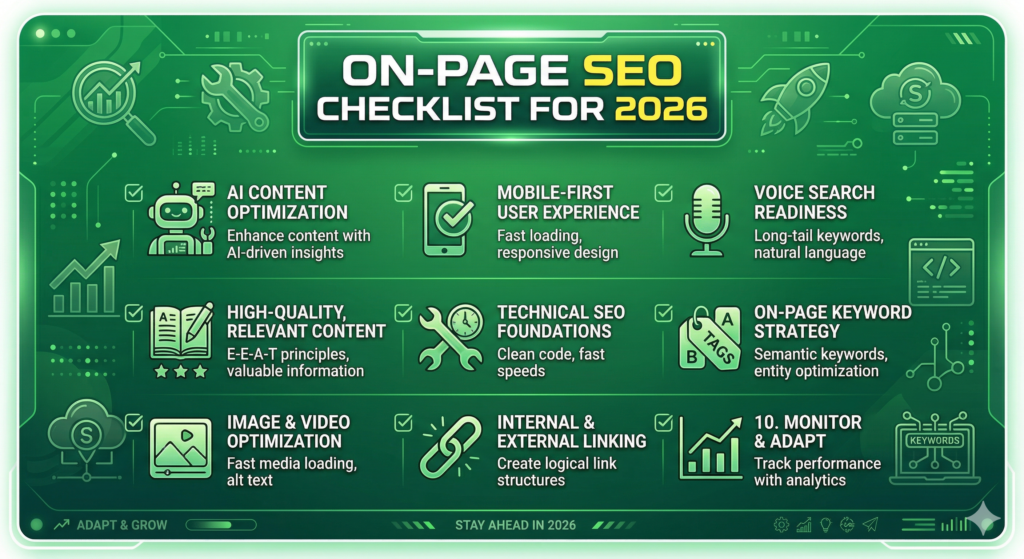
On-page SEO is one of the most important parts of ranking your website on search engines. In 2025, search engines became smarter, focusing more on user experience, content quality, and relevance rather than just keywords. This means that simply writing content is not enough anymore—you need to optimize it properly.
In 2026, competition is higher than ever, and every small detail matters. From your title to your images and internal links, everything plays a role in ranking. If you follow a proper on-page SEO checklist, you can improve your chances of ranking higher and getting more organic traffic.
Understanding On-Page SEO
On-page SEO refers to all the optimization techniques you apply directly on your website to improve its visibility on search engines like Google. It includes content optimization, HTML tags, keyword usage, and user experience improvements.
For example, if you write a blog post but don’t optimize the title, headings, or images, search engines may not understand your content properly. On-page SEO helps search engines understand what your content is about and show it to the right audience.
In simple terms, it is about making your content both search-engine-friendly and user-friendly.
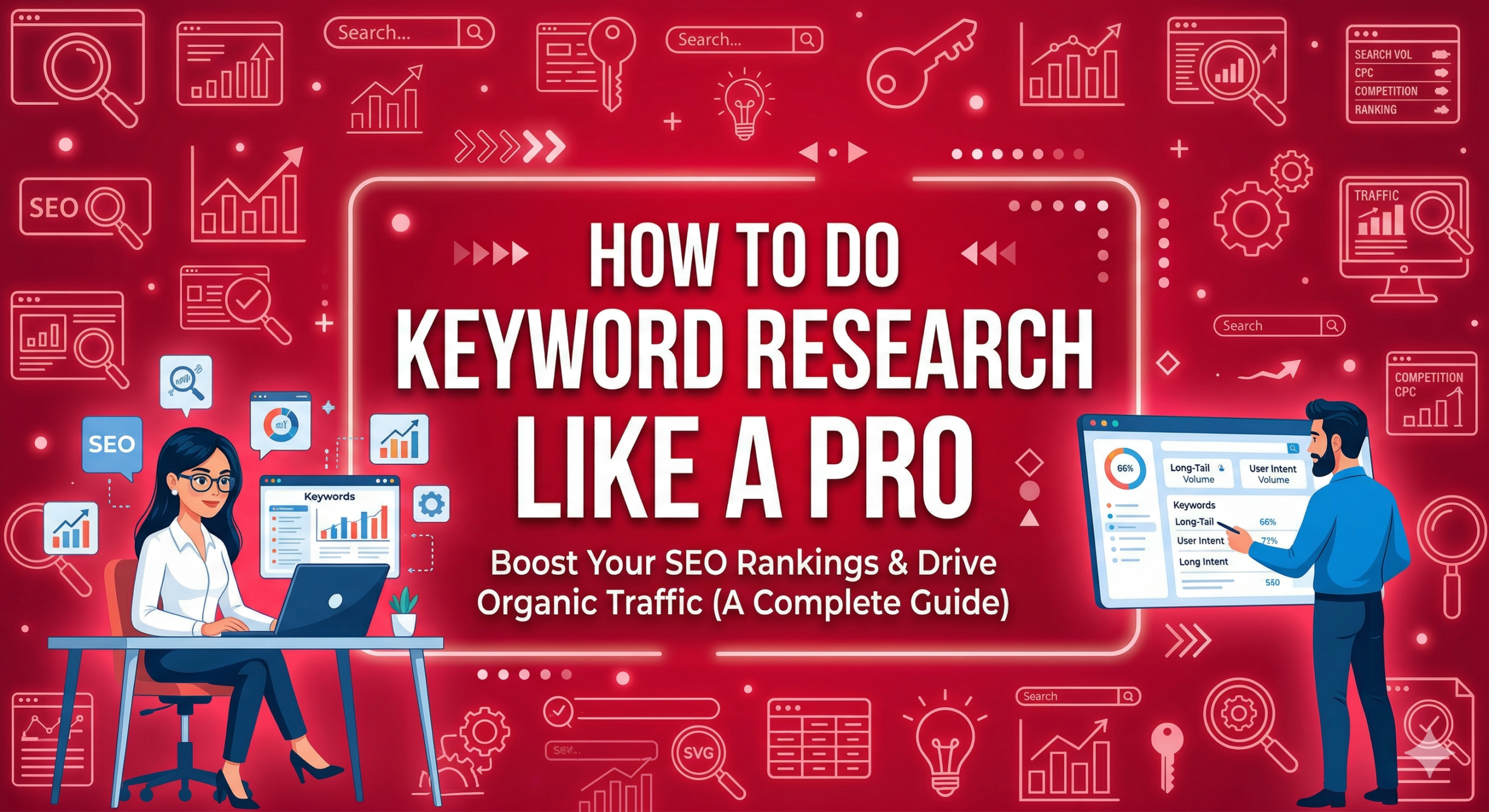
Choosing the Right Keywords
Keyword selection is the first and most important step in on-page SEO. If you choose the wrong keywords, even the best content may not rank.
Focus on long-tail keywords that have lower competition and clear intent. For example, instead of targeting “SEO,” go for something like “on-page SEO checklist for beginners 2026.”
You can use tools like Ubersuggest or Ahrefs to find the best keywords. These tools help you understand search volume, competition, and keyword difficulty.
Also, always match the keyword with user intent. If users want a guide, your content should be detailed and helpful.
Writing SEO-Friendly Titles
Your title is the first thing users see on search results, so it must be attractive and optimized.
Include your main keyword in the title naturally. Try to keep it clear, engaging, and under 60 characters so it doesn’t get cut off.
For example, instead of writing a boring title, make it more clickable like “Complete On-Page SEO Checklist for 2026 (Boost Rankings Fast).”
A good title increases your click-through rate, which directly impacts your ranking.
Optimizing Meta Description
The meta description is a short summary of your page that appears below the title in search results.
Although it does not directly affect rankings, it plays a big role in attracting clicks. Write a clear and engaging description that includes your main keyword.
Keep it around 150–160 characters and make it sound natural. Think of it like a small advertisement for your blog.
If your meta description is compelling, more people will click on your link.
Proper Use of Headings (H1, H2, H3)
Headings help structure your content and make it easier to read.
Your main title should be in H1, and you should use H2 and H3 for subheadings. This improves readability and helps search engines understand your content structure.
For example, if you are explaining a topic, break it into sections using H2 headings and smaller points using H3.
Well-structured content keeps users engaged and reduces bounce rate.
Creating High-Quality Content
Content is still the most important factor in SEO.
Your content should be original, informative, and useful. Avoid copying from other websites, as duplicate content can harm your ranking.
Write in simple language so that beginners can understand. Use real-life examples to make your content more relatable.
Also, make sure your content answers the user’s question completely. The more value you provide, the better your chances of ranking.
Keyword Placement Strategy
Using keywords correctly is very important.
Place your main keyword in the title, introduction, headings, and conclusion. But avoid overusing it, as keyword stuffing can harm your ranking.
Use related keywords and synonyms naturally throughout the content. This helps search engines understand your topic better.
For example, instead of repeating the same keyword, you can use variations to make your content more natural.
URL Structure Optimization
Your URL should be clean, short, and easy to understand.
Include your main keyword in the URL and avoid using unnecessary numbers or symbols.
For example, instead of a messy URL, use something like:
yourblog.com/on-page-seo-checklist-2026
A simple URL improves both user experience and search engine understanding.
Image Optimization Techniques
Images make your content more engaging, but they also need to be optimized.
Use relevant images that support your content. Always add alt text to describe the image, as this helps search engines understand it.
Also, compress images to reduce file size and improve loading speed.
For example, instead of uploading a large image, use compressed formats to keep your website fast.
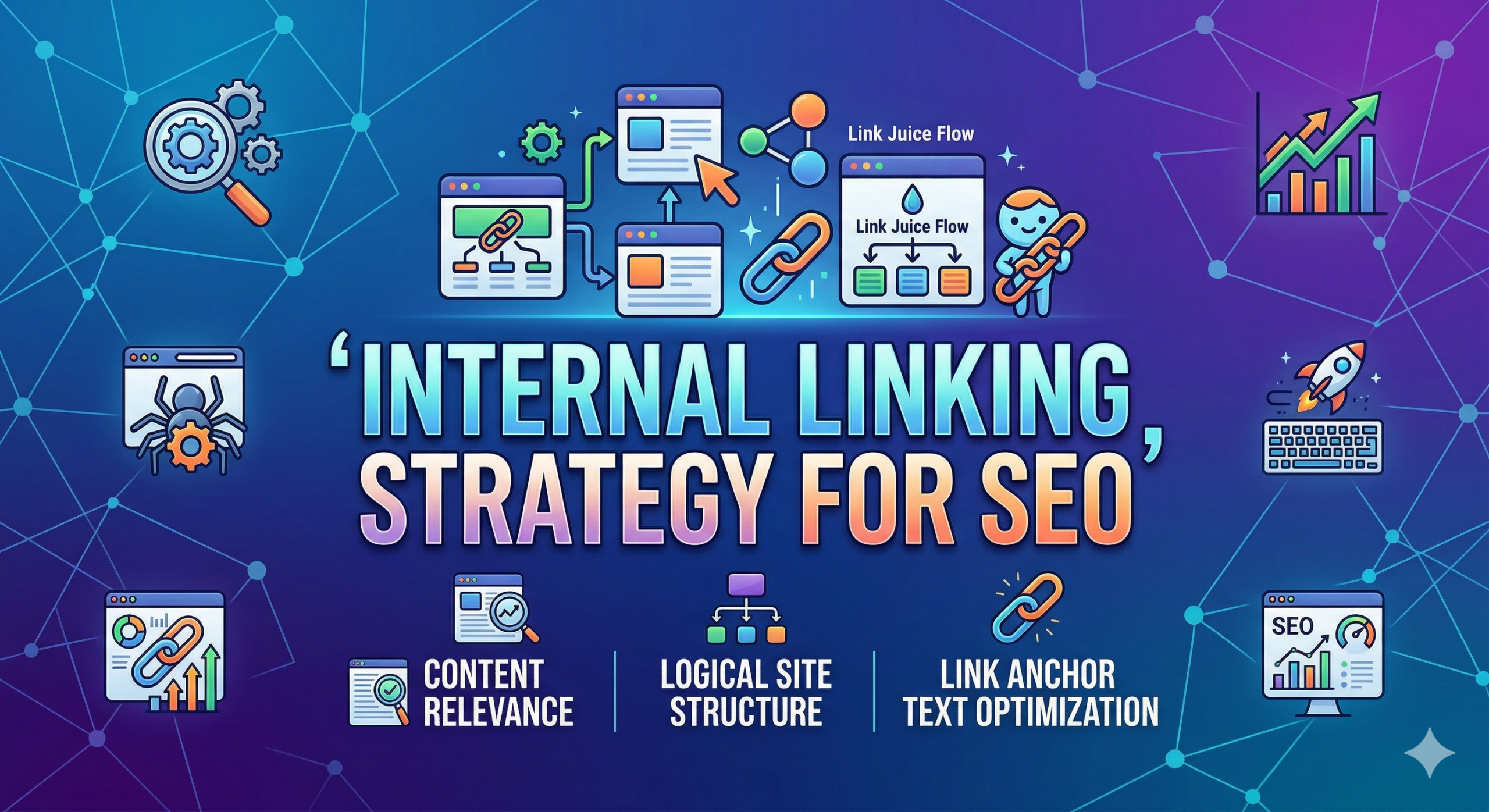
Internal Linking Strategy
Internal linking means linking one page of your website to another.
This helps users explore more content and increases their time on your site. It also helps search engines crawl your website better.
For example, if you have written a blog on keyword research, you can link it to your SEO checklist article.
Make sure your links are relevant and useful, not random.
External Linking Best Practices
External links connect your content to other trusted websites.
Linking to high-quality sources increases your credibility. For example, linking to official guides or trusted blogs can improve trust.
However, avoid linking to low-quality or spammy websites, as this can negatively affect your SEO.
Balance is important—use external links where necessary.
Improving Website Speed
Website speed is a major ranking factor in 2026.
If your site takes too long to load, users will leave quickly. This increases bounce rate and lowers your ranking.
Use tools like Google PageSpeed Insights to check your site speed and fix issues.
Simple steps like compressing images, using caching, and choosing a good hosting provider can improve speed.
Mobile-Friendly Design
Most users browse websites on mobile devices, so your site must be mobile-friendly.
A responsive design ensures that your website looks good on all screen sizes.
If your site is not mobile-friendly, you may lose a large number of visitors.
Search engines also prioritize mobile-friendly websites, making it essential for SEO.
Enhancing User Experience
User experience plays a big role in SEO.
Your website should be easy to navigate, visually appealing, and free from clutter.
Use short paragraphs, clear headings, and readable fonts. This makes your content easier to consume.
Also, avoid too many ads or pop-ups, as they can annoy users and increase bounce rate.
Fixing Technical Errors
Technical issues can harm your SEO performance.
Check for broken links, duplicate content, and indexing issues regularly.
Tools like Google Search Console can help you identify and fix these problems.
Keeping your website technically clean ensures better crawling and indexing.
Optimizing for Featured Snippets
Featured snippets appear at the top of search results and can bring a lot of traffic.
To optimize for snippets, answer questions clearly and concisely.
Use simple language and structured formats like short paragraphs or definitions.
For example, if someone searches for a definition, your content should provide a clear and direct answer.
Keeping Content Updated
SEO is not a one-time task.
You should update your content regularly to keep it relevant. Add new information, update statistics, and improve outdated sections.
Fresh content signals to search engines that your website is active and valuable.
Updating old posts can also improve their rankings.
Conclusion
On-page SEO in 2026 is all about quality, structure, and user experience. By following a proper checklist, you can make your content more effective and increase your chances of ranking higher.
Focus on choosing the right keywords, creating valuable content, optimizing technical elements, and improving user experience. Avoid shortcuts and follow best practices consistently.