In 2026, artificial intelligence has moved far beyond simple chatbots and writing assistants. AI agents are now capable of running workflows, managing digital tasks, automating business processes, and even acting like personal digital employees. This shift has changed the way developers, bloggers, marketers, and students work every day.
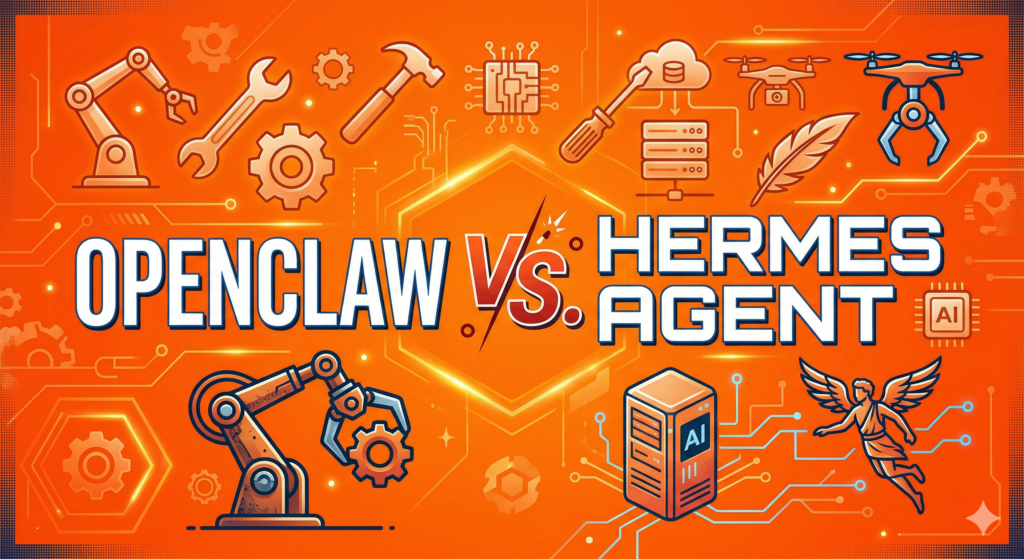
Two of the most talked-about AI systems in this space are OpenClaw and Hermes Agent. Both are powerful in their own way, but they follow completely different approaches. OpenClaw is designed for large-scale automation across multiple platforms, while Hermes Agent focuses on learning, memory, and long-term intelligence.
Because both tools solve different problems, many users get confused about which one to choose. This detailed guide will explain OpenClaw vs Hermes Agent in simple language so you can clearly understand their differences, strengths, and real-world use cases.
What is OpenClaw?
OpenClaw is an AI automation system built to connect different apps, platforms, and tools into a single working environment. It acts like a central control system where users can manage multiple digital tasks without switching between different applications.
The main idea behind OpenClaw is automation at scale. It allows users to create workflows that connect messaging platforms, email systems, browsers, cloud tools, and databases. Once set up, these workflows run automatically based on triggers and conditions.
For example, if a new message arrives in a chat system, OpenClaw can automatically send a reply, update a spreadsheet, and notify a team member. This reduces manual work and improves efficiency significantly.
OpenClaw is mostly used by developers, startups, and businesses that need to handle large-scale operations. It is powerful, flexible, and highly customizable, making it suitable for technical users who want full control over automation systems.
What is Hermes Agent?
Hermes Agent is an intelligent AI system designed around learning, memory, and adaptation. Unlike traditional automation tools, it does not just execute tasks. It learns from user behavior and continuously improves its performance over time.
The core concept of Hermes Agent is personalization. It remembers past conversations, user preferences, and task patterns. Based on this memory, it adjusts its responses and suggestions to better match the user’s needs.
For example, if you use Hermes Agent for writing blog content, it gradually learns your writing style and starts generating more aligned content over time. If you use it for research, it understands your interests and delivers more relevant information in future interactions.
This makes Hermes Agent feel more like a personal AI assistant that grows with the user rather than just a static tool.
Key Differences Between OpenClaw and Hermes Agent
The biggest difference between OpenClaw and Hermes Agent is their core purpose.
OpenClaw is designed for system-level automation, where the goal is to connect multiple tools and automate workflows across platforms. Hermes Agent is designed for intelligent assistance, where the goal is to learn from the user and improve decision-making over time.
OpenClaw focuses on external systems and integrations, while Hermes Agent focuses on internal intelligence and personalization.
Another major difference is how they operate. OpenClaw requires structured workflow setup, where users define triggers and actions. Hermes Agent operates more naturally, adapting based on interaction without heavy manual setup.
In simple terms, OpenClaw is about managing systems, while Hermes Agent is about understanding users.
Practical Comparison of Both Tools
In real-world usage, OpenClaw is more suitable for businesses and teams that need to manage multiple platforms at once. It can automate communication, update databases, manage workflows, and connect various tools together.
For example, an e-commerce business can use OpenClaw to automatically handle order updates, customer notifications, and inventory tracking without manual intervention.
Hermes Agent, on the other hand, is more suitable for individuals who want a smart productivity assistant. Students can use it for studying, writers can use it for content creation, and researchers can use it for data analysis and idea generation.
For example, a blogger can use Hermes Agent to generate ideas, improve writing quality, and maintain consistency in tone and style over time.
OpenClaw works like a control center managing multiple operations, while Hermes Agent works like a personal mentor guiding and improving your performance.
Features of OpenClaw
OpenClaw offers strong automation capabilities that allow users to design complex workflows across different platforms. It supports integration with messaging apps, cloud services, APIs, and productivity tools.
One of its key features is workflow automation, where users can create step-by-step processes that run automatically based on specific triggers.
It also supports modular plugins, allowing users to expand its functionality depending on their needs. This makes it highly flexible for enterprise-level usage.
Another important feature is multi-platform integration, which ensures that different systems can communicate and work together smoothly.
Features of Hermes Agent
Hermes Agent is built around adaptive intelligence and memory-based learning. It remembers past interactions and uses that knowledge to improve future performance.
Its learning system allows it to gradually understand user behavior, preferences, and work style. This makes its responses more accurate and personalized over time.
It also supports contextual understanding, which helps it manage long conversations and complex tasks more effectively.
Another key feature is self-improving workflow adaptation, where the system adjusts its performance based on user feedback and interaction history.
Benefits of OpenClaw
OpenClaw provides major advantages for businesses and technical users. It reduces manual workload by automating repetitive tasks across multiple platforms.
It improves productivity by connecting different systems into a unified workflow environment.
It is also highly scalable, making it suitable for both small teams and large enterprises.
For organizations, it helps improve communication, reduce delays, and increase operational efficiency.
Benefits of Hermes Agent
Hermes Agent offers strong advantages for individuals who want long-term productivity improvement. Its ability to learn from user behavior makes it more efficient over time.
It helps users save time by remembering preferences and providing better suggestions automatically.
For students, it improves learning efficiency by adapting to study patterns and simplifying complex topics.
For creators, it enhances creativity by generating ideas based on past work and interests.
Challenges and Limitations
OpenClaw can be difficult for beginners because it requires technical setup and understanding of workflows. Without proper configuration, users may not fully utilize its potential.
Hermes Agent also has limitations, especially during early usage stages. Since it relies on learning, it may take time to fully adapt to user behavior.
Both systems require consistent use to deliver optimal results, and improper setup can reduce efficiency.
Another limitation is that users must clearly understand whether they need automation or intelligence before choosing between the two.
Future of AI Agents in 2026 and Beyond
AI agents are expected to become even more advanced in the future. Systems like OpenClaw may evolve into fully visual automation platforms with easier setup and stronger integrations.
Hermes Agent-like systems may become more autonomous, with deeper memory systems and better decision-making abilities.
In the future, we may also see hybrid AI agents that combine both automation and intelligence. These systems will not only execute tasks but also learn, adapt, and improve continuously.
This will completely change how individuals and businesses interact with technology.
Conclusion
OpenClaw and Hermes Agent are both powerful AI systems, but they are built for different purposes. OpenClaw focuses on automation and system-level control, making it ideal for businesses and developers. Hermes Agent focuses on learning and personalization, making it ideal for individuals and creators.
The right choice depends on your needs. If you want to automate multiple systems and manage workflows, OpenClaw is the better option. If you want a smart assistant that learns and improves with you, Hermes Agent is the better choice.
In 2026, the smartest approach is to clearly define your goals first and then choose the tool that matches your workflow. Both tools are powerful, and when used correctly, they can significantly improve productivity, efficiency, and digital performance.